Kendamil vs Similac Formula Comparison

With so much conversation around baby formula these days, many parents are taking a closer look at what's actually in their baby's bottle. From ingredient sourcing and processing methods to organic certifications and specialty formulas, there is a lot more to consider than there was just a few years ago.
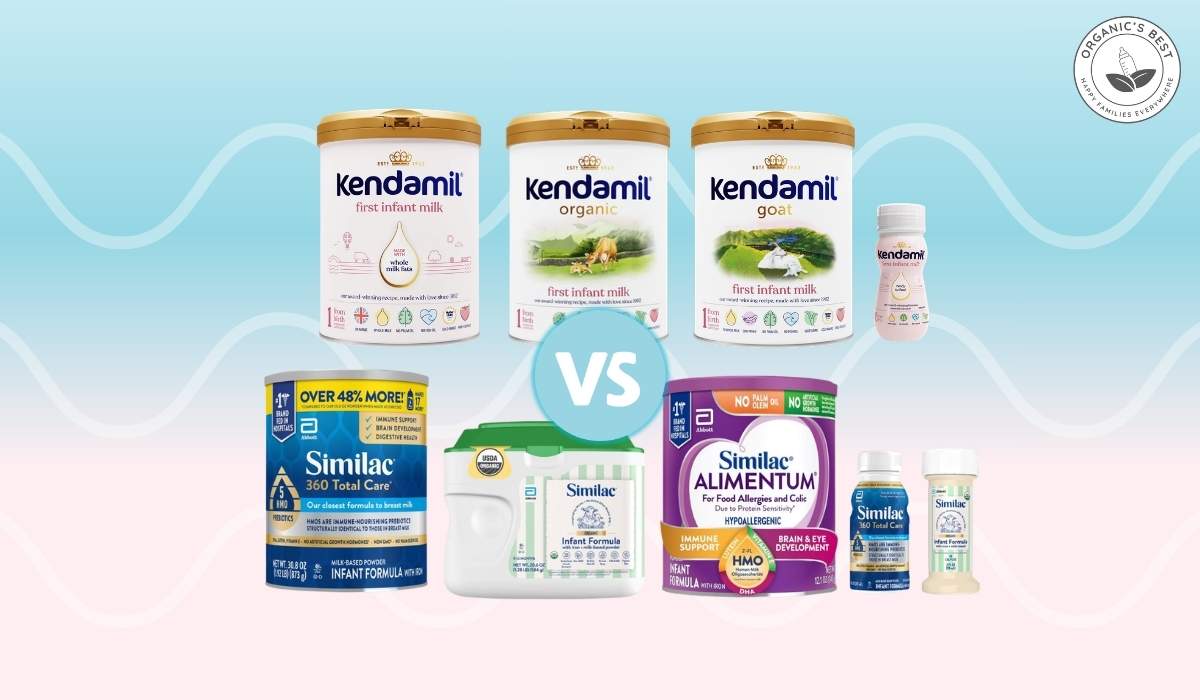
When comparing formula brands, looking at them side by side is often the easiest way to understand what sets them apart. In this guide, we're comparing one of the most popular American formula brands, Similac, with one of Europe's fastest-growing favourites, Kendamil.
Kendamil is a British formula known for its whole milk recipes. Their formulas use plant-based DHA and avoid ingredients such as palm oil, fish oil, and soy. The brand offers organic and conventional cow's milk formulas, as well as a goat milk line. It is widely available throughout Europe and increasingly popular in North America.
Similac is one of the most established infant formula brands in the United States, with a large range of products designed to support a variety of feeding needs. Many Similac formulas contain human milk oligosaccharides (HMOs), are non-GMO, and are made without palm oil. Its widespread availability, extensive product selection, and competitive pricing have made it a go-to choice for many American families.
Below, we'll take a closer look at how Kendamil and Similac compare, including their ingredients, nutritional profiles, product ranges, and the feeding situations each brand may be best suited for.
Table of Contents
- Similac vs Kendamil UK: American vs European Formula
- Kendamil UK Overview
- Similac Overview
- Kendamil Organic UK vs Similac Organic Comparison
- Kendamil Classic UK vs Similac 360
- Kendamil Goat vs Similac Alimentum
- Kendamil Ready to Feed vs Similac Ready to Feed
- Kendamil or Similac: Which Formula is Healthier for a Breastfed Baby?
- A Few Words About Other Similac Formulas
- Quick Overview for Kendamil USA vs Similac
- Similarities and Differences Between Kendamil and Similac: Comparison Chart
- Kendamil or Similac: Which Formula is the Right Choice for Your Baby?
- Final Thoughts on Kendamil Formula vs Similac
- FAQs on Kendamil vs Similac
Similac vs Kendamil UK: American vs European Formula
Before we do a deep dive into both formula brands, it is helpful to look at how they are regulated, as this significantly impacts the final product.

Regulatory Standards
Both Kendamil and Similac are strictly regulated and designed to provide complete infant nutrition, but they follow different regulatory systems.
Similac follows regulations set by the U.S. Food and Drug Administration (FDA). The FDA requires infant formulas to contain 30 essential nutrients, including protein, fat, carbohydrates, vitamins, and minerals. The FDA also places upper limits on nutrients such as vitamins A and D, which can be harmful if consumed in excessive amounts.
Kendamil UK follows regulations by the European Food Safety Authority (EFSA), which are some of the strictest in the world. European regulations set requirements for nutrient composition, including protein, fats, carbohydrates, vitamins, and minerals. They also require DHA in all infant formulas, place strict limits on contaminants, and prohibit ingredients such as artificial colours, preservatives, sweeteners, and carrageenan in infant formula.
These rigorous standards have contributed to the growing popularity of European formulas like Kendamil.
Specialized Formulas and Product Range
Kendamil and Similac also differ in the types of products they offer. Kendamil UK offers fewer types of formula, while Similac provides a wider variety of products, with more specialized options for unique feeding needs.
That said, Kendamil formulas are organized into stages, following the European standard. Each range is offered in 2-3 stages, with nutrition tailored to support different stages of development, from early infancy through toddlerhood.
Parent Experiences
Similac parents often highlight how easy it is to find and the wide range of specialized options for needs like reflux, lactose sensitivity, or prematurity, with many sticking to it once they find a formula that works due to its consistency and availability.
Kendamil is more often described as clean and easy to digest, thanks to its whole milk base and gut-supporting ingredients, with many parents noting it’s well tolerated during the transition from breast milk due to its creamy, milk-fat–rich profile.
Kendamil UK Overview
Kendamil is a family-run British brand that’s been around for over 60 years. Their formulas are made in England’s Lake District, an area famous for its dairy farming and UNESCO World Heritage status, or in trusted partner facilities across Europe when needed to keep up with the brand's growing demand.
One of the biggest things that sets Kendamil apart is that it uses whole milk as its main fat source. This means there’s less reliance on skimmed milk and added vegetable oils, resulting in a texture and composition closer to breast milk.
Each formula includes prebiotics for gut health, plant-based DHA for brain and eye development, and plenty of essential vitamins and minerals to support growth. Kendamil is certified vegetarian and avoids ingredients like palm oil, fish oil, starch, maltodextrin, and soy.
Kendamil UK comes in three ranges:
-
Kendamil Classic Formula – Their standard range, made with both whole and skimmed cow’s milk. It also comes in a ready-to-feed option for added convenience.
-
Kendamil Organic Formula – Made with certified organic ingredients under strict EU organic standards, using whole and skimmed cow’s milk.
-
Kendamil Goat Milk Formula – Made with whole A2 goat’s milk, which some parents find easier for babies to digest.
Similac Overview
Similac is a U.S.-based infant formula brand owned by Abbott Laboratories. It has been producing baby milk for generations and is one of the most widely used formula brands in North America, and the #1 brand used in US hospitals.
Most Similac formulas are non-GMO, and many are made without artificial growth hormones, palm oil, or corn syrup. They also offer organic options.
The brand recognizes breast milk as the gold standard and designs its formulas to be as close to it as possible while meeting U.S. nutritional standards.
Similac formulas are manufactured in several facilities across the United States and are available in both powder and ready-to-feed liquid formats, making them widely accessible and easy to find.
While we won’t be looking at every formula from the brand, we will compare some of their most popular options side by side to see how they compare, including:
-
Similac Organic – A USDA-certified organic cow's milk infant formula made with non-GMO ingredients and no palm oil or corn syrup, designed to support healthy growth as well as brain and eye development.
-
Similac 360 Total Care – Similac's closest formula to breast milk, featuring a blend of 5 HMOs to support immune health, brain development, digestive health, and overall growth, with non-GMO ingredients.
-
Similac Alimentum – A hypoallergenic formula made with extensively hydrolyzed milk proteins to help manage symptoms of cow's milk protein sensitivity and food allergies.
All three of these formulas, as well as additional Similac products, also come in ready-to-feed versions.
Kendamil Organic UK vs Similac Organic Comparison
First, let's compare the two organic offerings from Kendamil and Similac.
Milk Source
Kendamil uses whole milk as its base, retaining natural milk fats and components like milk fat globule membrane (MFGM), along with a small amount of skim milk, sourced from grass-fed British cows. Similac 360, by contrast, uses nonfat milk and builds its fat content primarily from added oils.
Ingredients/Nutrition
Both Kendamil and Similac Organic provide complete infant nutrition and share key ingredients, including lactose as the main carbohydrate, plant-based DHA and ARA for brain and eye development, and added vitamins and minerals. Both also leave out palm oil and include prebiotics, though they use different sources.
Kendamil uses a whole milk base with GOS plus an HMO (3’-GL) and avoids soy oil, resulting in a simpler, dairy-forward profile. In contrast, Similac Organic contains plant-derived FOS prebiotics.
Both are certified organic, Kendamil by the EU and Similac by the FDA.
Digestibility
Both Kendamil and Similac are designed with breast milk–inspired features that support gentle digestion, including lactose as the primary carbohydrate and added prebiotics to help promote a healthy gut environment.
Taste & Texture
Kendamil is creamy and rich due to its whole milk base. Similac is generally mild and neutral in flavor, with a creamy, slightly sweet profile.
Formula Stage
Similac follows a single-stage model common in the U.S., providing one formula for the entire first year. Kendamil UK differs by offering three stages with age-specific nutrition that continues into toddlerhood.
-
Kendamil Organic Stage 1 Infant Formula (0–6 months)
-
Kendamil Organic Stage 2 Follow-On Formula (6–12 months)
-
Kendamil Organic Stage 3 Toddler Formula (12+ months)
Availability & Price
Kendamil Organic UK, through Organic’s Best Shop, costs as low as $0.053 per 1g with the 12 + 2 free subscription plan. Similac varies by type but is around $0.046 per 1g in powdered form, making it slightly more affordable.
Kendamil Classic UK vs Similac 360
Next, we will take a look at two of the most widely used products from each brand: Classic Kendamil vs Similac 360 Total Care.
Milk Source
Kendamil Classic uses a whole-milk base with a small amount of skim milk, helping to retain natural milk fats and MFGM, and contains fewer added vegetable oils. The milk comes from European grass-fed cows. Similac 360 Total Care, on the other hand, starts with nonfat milk and builds its fat content using added seed oils.
Ingredients/Nutrition
Both Kendamil and Similac ingredients include plant-based DHA and use lactose as the sole carbohydrate source. A key difference is the fat blend; Similac includes soy oil, while Kendamil does not.
Kendamil uses galactooligosaccharides (GOS), fructooligosaccharides (FOS), and an HMO (3’-GL) for gut support, while Similac 360 Total Care uses a 5-HMO blend (including 2’-FL, LNT, 3-FL, 6’-SL, and 3’-SL).
Neither is certified organic, but both are made without GMOs.
Digestibility
Kendamil’s whole milk base, lactose as the main carbohydrate, and simpler fat blend without soy oil or emulsifiers may make it easier to digest for some babies.
Taste & Texture
Kendamil Classic is often described as creamy and rich, with a full, dairy-forward taste thanks to its whole milk base.
Similac 360 Total Care, in comparison, has a milder, more neutral flavor with a subtle hint of sweetness.
Both are well tolerated, especially since they lack a fishy taste thanks to plant-based DHA.
Formula Stage
There is only one stage of Similac 360 vs Kendamil, which is organized into three stages:
-
Kendamil Classic Stage 1 Infant Formula (0–6 months)
-
Kendamil Classic Stage 2 Follow-On Formula (6–12 months)
-
Kendamil Classic Stage 3 Toddler Formula (12+ months)
Availability & Price
Kendamil Classic UK through Organic’s Best Shop costs about $0.044 per 1g with the 12 + 2 free subscription plan, while Similac 360 Total Care averages around $0.057 per 1g when purchasing the powdered form. This means Similac's formula is approximately 30% more expensive than Kendamil Classic.
Kendamil Goat vs Similac Alimentum
Now, let's compare two of the gentler offerings, Similac Alimentum vs Kendamil Goat.
Milk Source
Kendamil Goat is made from whole goat’s milk, which has naturally smaller fat globules and a different protein structure that some babies may find easier to tolerate.
Similac Alimentum is a lactose-free, hypoallergenic formula that relies on corn maltodextrin as the first ingredient and sugar as part of the carbohydrate source. It uses extensively hydrolyzed nonfat cow’s milk proteins and corn maltodextrin to make it easier to digest and absorb.
Ingredients/Nutrition
Both Similac and Kendamil provide complete infant nutrition with DHA, ARA, vitamins, and minerals to support growth and development, but they use different formulation approaches.
Similac uses corn maltodextrin, hydrolyzed proteins, and a broader mix of fats and stabilizers, making it a more processed, specialized formula. Kendamil is more milk-based, using whole goat milk, lactose, and a simpler fat blend with fewer additives and no soy oil. Kendamil is also the only goat formula globally with natural MFGM and HMOs.
Digestibility
Both formulas are designed to support digestion, but in different ways. Similac Alimentum uses extensively hydrolyzed protein, making it suitable for babies with moderate sensitivities, as well as lactose intolerance, and includes 2’-FL HMO for added gut and immune support.
Kendamil Goat is made with goat whey, optimally adjusted to provide a 60:40 whey:casein ratio, reflecting early breast milk and offering enhanced digestibility. Plus, with the addition of GOS prebiotics, A2 proteins, and the milk's natural ability to form softer curds in the stomach, this formula may be easier for sensitive tummies to tolerate.
Although this formula is a gentler alternative to standard cow's milk options, it's not suitable for infants with lactose intolerance or cow's milk protein allergy.
Taste & Texture
Kendamil Goat is generally described as mild, creamy, and slightly sweet, with a rich texture that many babies accept easily.
Similac, because of its hydrolyzed proteins, can have a slightly bitter or metallic taste, though most babies adjust to it with continued use.
Formula Stage
Similac Alimentum is a single-stage product designed from birth to 12 months, while Kendamil Goat is divided into three stages.
-
Kendamil Goat Stage 1 Infant Formula (0-6 months)
-
Kendamil Goat Stage 2 Follow-On Formula (6-12 months)
-
Kendamil Goat Stage 3 Toddler Formula (12+ months)
Availability & Price
Kendamil Goat UK is available through Organic’s Best Shop at a competitive price of about $0.07 per 1g when purchasing a bulk order of 24 cans.
Similac Alimentum, on the other hand, is one of Similac’s higher-priced options, at around $0.10 per 1g when bought in a bulk pack of 6 12.1 oz cans, making it 30% more expensive than Kendamil Goat.
Kendamil Ready to Feed vs Similac Ready to Feed
Finally, let's compare the Ready to Feed formulas offered by both brands.
Milk Source
Kendamil RTF is the liquid version of the brand’s Classic formula. It follows the same core recipe, using whole milk from European grass-fed cows as a natural source of MFGM. Unlike the powdered formula, the ready-to-feed option is made without skimmed milk.
Similac RTF is available in several varieties, with the non-specialized versions containing non-fat milk.
Ingredients/Nutrition
Both Similac and Kendamil RTF provide complete infant nutrition and include important components such as lactose, plant-based DHA, HMOs, and prebiotics.
However, Similac RTF formulas can vary, with some including maltodextrin or starch, added sugars, soy oil, and additional additives.
Digestibility
Kendamil RTF uses the same core formulation as its Classic powder, which is generally well tolerated by many babies.
That said, Similac offers a wider range of ready-to-feed options designed for specific digestive needs. Their Sensitive formula is made for babies who experience fussiness, gas, or mild spit-up, while Alimentum is an extensively hydrolyzed option designed for more significant feeding sensitivities.
Taste & Texture
Kendamil Ready to Feed is creamy with a naturally mild sweetness that many parents feel is closer to breast milk.
Similac RTF is also creamy, with a slightly thicker texture than their liquid concentrate formulas and has a mild, subtly sweet taste.
Both are made with plant-based DHA rather than fish oil, which can result in a milder taste.
Formula Stage
Similac RTF products come in one stage suitable from 0-12 months, whereas Kendamil RTF comes in two stages.
-
Kendamil Ready to Feed Stage 1 (0-6 Months)
-
Kendamil Ready to Feed Stage 2 (6-12 Months)
Availability & Price
Kendamil Ready to Feed, when purchased in bulk through Organic’s Best Shop, comes to about $0.88 per fl oz.
Similac RTF varies by product, but a case of Similac 360 is roughly $0.42 per fl oz, with higher prices for more specialized formulas.
Kendamil or Similac: Which Formula is Healthier for a Breastfed Baby?
Parents often look for a product that feels closest to breast milk, especially when transitioning from breast milk to formula, or when supplementing with formula.
Both Kendamil and Similac include key breast milk–inspired nutrients such as HMOs, omega-3 fatty acids, and prebiotics to support digestion and immune health.
However, Kendamil takes an extra step closer to breast milk by using whole milk as its base.
A Few Words About Other Similac Formulas
We didn’t cover every Similac product above due to the brand’s wide range. Here’s a quick look at some of their other standout options.
Kendamil vs Similac Sensitive
Similac Sensitive formula is designed for babies with sensitive tummies, helping to ease fussiness, gas, and mild spit-up. It contains milk protein isolate, which is partially broken down to make it easier to digest, and maltodextrin, a gentle carbohydrate source that provides energy and is often used in place of lactose to help reduce digestive strain.
Kendamil UK's goat milk option may also help support babies with common digestive discomforts, and for babies with more unique feeding needs, they have Kendamil Comfort formula with partially hydrolyzed proteins designed to help manage colic and constipation.
Similac Advance vs Kendamil
Similac Advance is an iron-fortified, single-stage formula designed to support babies through their first year with nutrients for brain and eye development. Unlike Kendamil’s stage-based approach, which adjusts nutrient levels over time and increases iron in later stages to meet growing needs, Similac Advance offers a single stage with the same nutrient profile for 0-12 months.
Similac Irish Farms vs Kendamil
Within the Similac lineup, Irish Farms is often seen as the closest match to Kendamil, thanks to its use of fresh milk from grass-fed cows in Ireland. Similar to Kendamil, this formula avoids artificial growth hormones, palm oil, and corn syrup, and is also non-GMO. It is designed for parents seeking European-sourced ingredients from a U.S. brand.
Quick Overview for Kendamil USA vs Similac
Kendamil has been gaining more attention in the U.S., especially during the 2022 formula shortage, when some of its products were temporarily brought in to help ease supply challenges.
While many American parents order Kendamil UK products from online retailers outside of the country, the brand has also officially entered the U.S. market with FDA-compliant versions of its Classic, Organic, and Goat milk formulas, now available alongside established names like Similac.
However, the Kendamil formula sold in North America is not exactly the same as the original UK formulas. U.S. versions are adjusted to meet FDA regulations, while the original recipes follow European standards set by the European Food Safety Authority (EFSA), resulting in some minor differences between the regional products.
Similarities and Differences Between Kendamil and Similac: Comparison Chart
To make comparison easier, this chart highlights the main similarities and differences across each brand’s best-known products.

Kendamil or Similac: Which Formula is the Right Choice for Your Baby?
Formula is not a one-size-fits-all product. First, choose a product your child tolerates well and that meets all their nutritional needs. Second, you may also consider your budget, product availability, and ingredient preferences.
When it comes to ingredients, many parents are now turning to whole-milk formulas like Kendamil because they are less processed and offer more of breast milk's compositional qualities.
However, when more targeted nutritional support is needed, Similac offers a broader range of specialized formulas tailored to specific feeding concerns. As always, your pediatrician is the best resource to help guide that decision.
Kendamil UK Formula Pros & Cons
First, let’s look at why so many parents are switching to Kendamil, as well as some reasons others may choose a different option.
Kendamil Pros:
-
European-made
-
Uses whole milk to provide natural fats
-
Contains prebiotics to support digestive health
-
Comes in multiple stages for age-tailored nutrition
-
Offers both organic, whole milk, and goat milk options
-
Free from palm oil
-
Lactose-only carbohydrates
-
Fewer added vegetable oils
-
Includes components also present in breast milk, like MFGM and HMOs
-
Easy to find and affordable at Organic’s Best Shop
Kendamil Cons:
-
The UK version is not FDA-approved
-
Includes skimmed milk in certain formulas
-
Not all options are organic
Similac Formula Pros & Cons
Now, let’s take a look at what makes Similac one of the most widely used products in the U.S., as well as some of its potential drawbacks.
Similac Pros:
-
Extensive product range
-
FDA-approved
-
Widely available across the U.S.
-
Research-backed recipes
-
Palm oil free
-
Contains a blend of 5 HMOs structurally identical to those found in breast milk
-
Most products are available in powder, liquid concentrate, and ready-to-feed forms
Similac Cons:
-
Contains soy oil
-
Some products use additives, including carrageenan
-
Uses non-fat milk
-
Only available in one stage
-
Some recipes contain added sugar
Final Thoughts on Kendamil Formula vs Similac
The choice between Kendamil vs Similac depends on your baby’s feeding needs, along with your preferences around ingredients, budget, and availability.
Once you’ve found the right match, the next step is making sure it stays accessible. That’s where Organic’s Best comes in, helping you keep Kendamil UK reliably in stock.
FAQs on Kendamil vs Similac
Here are some of the most asked questions about Kendamil and Similac baby formula.
What's Better, Similac or Kendamil?
Both brands provide complete nutrition and meet strict safety standards, but many parents prefer Kendamil for its whole-milk formula and European standards. Ultimately, the best formula is the one your baby tolerates well and that fits your family's needs.
Can I Switch My Baby from Similac to Kendamil?
Yes, most babies can transition from Similac to Kendamil. Unless your pediatrician advises otherwise, it is best to switch gradually by mixing increasing amounts of Kendamil with your baby's current formula over several days. Temporary changes in digestion, stool patterns, or feeding habits can be normal during the transition.
Is Kendamil Easier to Digest than Similac?
Many parents report that their babies do well on Kendamil formula thanks to its whole-milk fat source with naturally occurring MFGM, prebiotics, and a palm oil-free formula. The goat milk line is particular is often well tolerated by little ones with sensitive tummies. However, every baby is different, and tolerance can vary.
Is Similac or Kendamil Closer to Breast Milk?
Both brands are designed to provide nutrition inspired by breast milk, but Kendamil's whole milk recipe gives it a natural milk-fat profile that many parents feel more closely resembles breast milk.
More Helpful Guides:
Kabrita vs Kendamil: A Comprehensive Comparison Guide
Kendamil vs Bobbie: European vs American Formula Compared
Kendamil vs Enfamil Formula Comparison Guide
|
Disclaimer: Please be aware that this information is based on general trends in babies, and it is not medical advice. Your doctor should be your first source of information and advice when considering any changes to your child’s formula and when choosing your child’s formula. Always consult your pediatrician before making any decisions about your child’s diet or if you notice any changes in your child. Breastfeeding is the best nutrition for your baby because breast milk provides your child with all the essential nutrients they need for growth and development. Please consult your pediatrician if your child requires supplemental feeding. |

Leave a comment
Comments will be approved before showing up.
Also in Organic Infant Nutrition and Health Blog